Preparing for the e-invoice? These 5 practical pieces of information will make it easier for you
05.06.2026 12:04
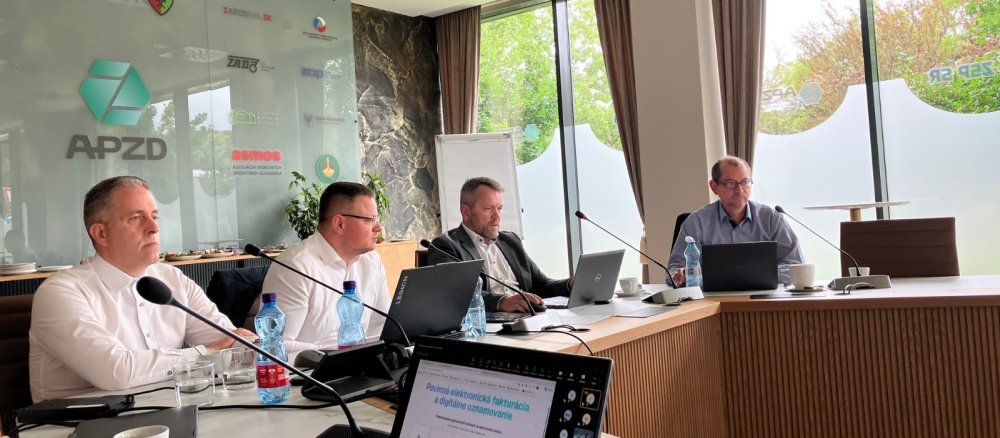
At today's workshop of the Automotive Industry Association of the SR and the Association of Industrial Unions and Transport, together with the Vice-President of ZAP SR Richard Hollý, the Director of the Indirect Taxes Department of the Ministry of Finance of the SR Mojmír Beňo, the General Director of the IT Section of the Financial Administration of the SR Stanislav Pavlovič and the Director of the Tax Department of PwC Slovakia Ján Skorka, we discussed the current developments related to the mandatory introduction of electronic invoicing from 1 January 2027.
What is worth knowing?
1. You can join voluntarily
This week, the Financial Administration made available the possibility of voluntarily joining electronic invoicing even before its mandatory introduction. Companies can thus already today choose their digital postman (the Peppol network). The current „pilot“ period allows VAT payers to send e-invoices via the Peppol network even without the customer's consent.
2. You choose the digital postman yourself
When using a digital postman, companies choose a certified delivery service provider according to which solution suits them. The provider can later be changed and, as needed, several can be used.
3. Automatic reporting does not mean the end of the control statement
If you send e-invoices via the Peppol network, the data will be automatically reported to the Financial Administration. You will, however, still have to report them in the control statement, and that until 1 July 2030.
4. You can also use another method to send e-invoices
If you decide not to send e-invoices via a digital postman, you need to have the customer's consent in advance. An invoice sent, for example, by e-mail must at the same time meet all the legal and technical requirements (a structured .xml file, in UBL 2.1 or CII D16B format meeting the European standard EN 16931). In this case you do not have the obligation to report selected data from e-invoices to the Financial Administration. Only the obligation of the control statement remains.
5. The obligation to receive e-invoices
From 2027, all entrepreneurs will have to be able to receive e-invoices through a digital postman, regardless of whether or not they are VAT payers.
As representatives of companies, we hope that the new system will be fully functional. Given the non-negligible financial and administrative costs associated with the introduction of the e-invoice, we naturally expect from the state the promised benefits for honest entrepreneurs. In addition to the free invoice archiving service, there should be real value in return, for example in the form of not raising or reducing taxes for those who duly fulfil all their obligations.
Useful links
Companies can choose a digital postman here.
A practical guide for choosing a digital postman is available here.
SOURCE: APZD